Should You Take The Time To Learn An Instrument?

Learning an instrument can take time and patience but can help considerably when working on original music.

The guitar and the piano and going to probably be the most beneficial.

Piano will make melody writing easier in the short term. On a piano, all the notes (A-G) are next to each other on the keys, meaning a short trial and error should lead you to the basic melody you are looking for. Flats and sharps are easily identifiable, as they are the black keys.

Guitar is a little more challenging when it comes to hearing the melody. Notes run along six strings, with flats and sharps being not so easily identifiable. The guitar can help to find and demonstrate the rhythm of your song, having a hand specifically for strumming, means you are going to be in more control of the sound you are making in the early days of the guitar.

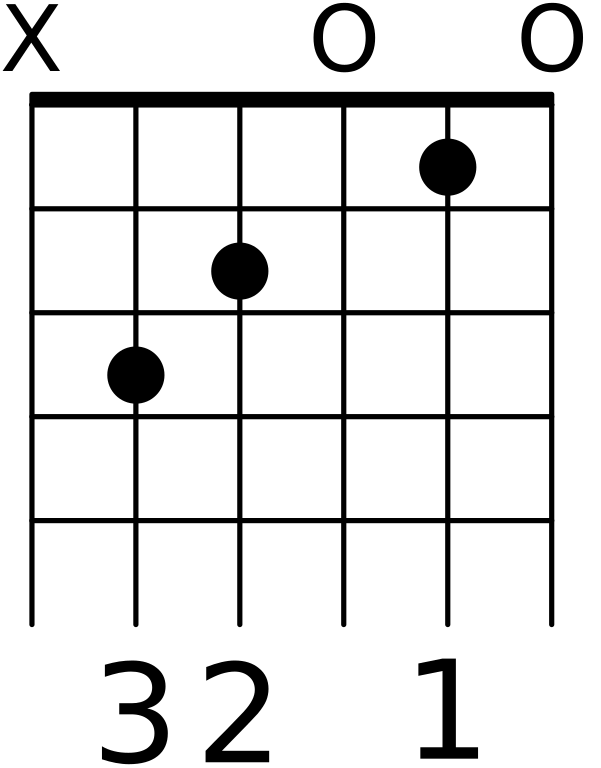
Learning the shapes of the chords is going to be harder than piano too, as there are many different shapes. All major piano chords use three fingers and shouldn’t take too long to learn, as most follow a play a key miss a key formula (1-3-5), whilst guitar chords are spread out over multiple strings.

A C chord on Piano
A C chord on guitar

It would be beneficial to write all the notes on the white keys of your keyboard, this will help you jump straight to that note. I wrote mine in a whiteboard pen but if it just to learn and maybe record on, then permanent marker would be fine. You can buy stickers for guitars with notes on but these are much more daunting and messy than the piano ones: https://www.amazon.co.uk/FRETNOTE-Stickers-Guitar-6-String-Fretboard/dp/B01M24DJUX/ref=asc_df_B01M24DJUX/?tag=googshopuk-21&linkCode=df0&hvadid=310836174627&hvpos=1o2&hvnetw=g&hvrand=3850485347270101680&hvpone=&hvptwo=&hvqmt=&hvdev=c&hvdvcmdl=&hvlocint=&hvlocphy=9046663&hvtargid=pla-563061763571&psc=1

Learning instruments can also have many health benefits. It can help to keep your mind sharp and improve your concentration. In the long term, this is said to help fight dementia and Alzheimers by up to a third. Back to the short term, music will simply help your mood (unless you’re Chris Martin of Coldplay) I jest. Putting together a new song and an idea or sound falling into place on your instrument can’t help but leave a smile on your face. Replicating your favourite songs and showing them off to friends and family should help spread the joy. Write your spouse a love song, you have yourself a free and easy birthday gift (jest again). Playing an instrument can definitely help to relieve stress and will have you enter a completely new social circle, should you choose to get involved in it.

Learning an instrument can be challenging and sometimes stressful when starting out. Have a look at your favourite artists and try to see what they started out playing. Both will be incredibly challenging to master but reasonably simple to get a sound out of. There’s plenty of Youtube channels offering free lessons but paying for at least a few would help things to click quicker. Once you have learnt musical scales and notation, you should find the knowledge transfers to a whole host of other instruments too.

Of course there are other instruments you can write on but there is a reason that so many choose the piano or guitar. If you are even half thinking about learning then please do so! I am sure one of your family or friends will have an instrument (preferably a piano or guitar) for you to try out or even borrow. Hopefully you will get the bug but even the basics will help your songwriting improve.

Original Music: What Came First, The Audience or the Gig?

Unlike covers gigs (where you have to try keep the people already there entertained) with original gigs, you will be under pressure to get the people to come and then entertain them too.

In the past, you would definitely argue that live performances were essential before building a following but, as with most things, I think the internet has changed this.

I personally believe that although gigging is still beneficial, that it is more essential to get at least a few of your best tracks down professionally and uploaded to Spotify and Apple Music etc. if you are serious about making a real go at it. You may just enjoy the thrill of being on stage but if you want more who than that, you will definitely need to allow fans to find your social media and original material online, especially if you want them to keep up to date with future gigs.

The events will often be run by a promoter. Sometimes sleezy, sometimes super. You need to get to know the most reputable ones in your area. This means the one who is going to give you the best ticket cut, provide the better quality venue and even the better quality sound engineer. They may also only do certain nights. Convincing your mob to come on a Monday night, is much more difficult than a Friday or Saturday.

It is definitely annoying when a very average band bring lots of people and end up headlining or winning a battle of the bands because of it, even though you know your band is much better. You need to think about the opportunities this presents. Being a band lower down the bill, you are likely to be required to sell less tickets and most people will be there to catch at least a bit of your set. You can spread all your promotional material around and if you are any good and your music is a fitting, the gig can be looked at as a potential hotbed of new fans.

As usual, your approach will differ depending on what you are looking for from the original music scene. If you were to do both, you would immediately see that there’s a huge difference in not only the venues and the audience you are playing to but also the buildup to the gig. Expect to be a part-time salesman when it comes to your original music.

music black and white keyboard technology instrument piano musical instrument yamaha string instrument digital piano luxury vehicle electronic device musical keyboard computer component electronic instrument electric piano player piano

What Should You Be Charging As A Performer?

This blog mainly applies to artists who sing in pubs and clubs as a source of income. You will find that when you are an original act, things will work a lot differently with your earnings coming through ticket sales, rather than a set amount. But what should you be charging to do your covers gigs?

There are many variables in place here, solos, duos, bands will obviously have to charge more, depending on how many people are splitting the profits.

Even at the beginning, you should not undervalue yourself. The many hours you have spent on practice and promotion and don’t forget the equipment you have bought. This should at least be reimbursed over a few gigs.

I was told to never perform for free but have fell for a few tricks in the past. “Do this gig free and we will give you a paid shot next time” and “We thought you could do it for the exposure” are the main two. My advice is just “no”.

I’m not too sure how I sit with open mic nights either. You are often performing for free but it does give you a chance to try out new material and the good ones give the better performers a bit of an incentive, be it a small split of their profit or at the very least a free drink.

We will presume you are a solo artist making your way in the pub/club scene. Again there are variables. Friday and Saturday are your main nights. I would say £150 is a minimum but £200 is definitely reasonable. This would be based on two 45 minute sets. Sundays are becoming increasingly popular. £130 for a Sunday afternoon would be a good figure to start with. As you gain a reputation (hopefully for being good or great) the fee you can ask for will obviously rise, sometimes considerably.

Events, such as New Year’s Eve and Christmas Eve will bring more money too, £500 and £350 respectively would be a fair price to start at for a good act but you should want to be a great act! I know a guy who won’t go out on NYE for less that £1000. This could be the type of money you can charge once you have the right reputation (as well as good negotiation skills).

£80-£100 would be good for a 45 minute set (I’ve found this to be the same in midweek) but don’t forget you’ll likely need to lug your equipment there and back.

If you decided to go through an agency, you will likely be paying 10/15% commission but good agencies open doors that are closed to many and I personally think that for the work they do, that that commission is well worth it.

Doing cheap gigs is tempting but you’re hurting your prospects in the long run. If you charge £60 on a Saturday night, you will not only come across as being worth that, but will not be able to go back and ask for £150 next time. Pubs usually communicate well too and it won’t be just that one that knows that you’re a cheap act.

Giving pubs gigs for this price hurts the industry as a whole too. We should be working together to keep this as a possible full-time income. Charge what you think you’re worth, not what somebody else thinks you’re worth and don’t be afraid to walk away. If you go in confidently with a high price, you’re going to come across as an experienced, successful act.

snow winter guitar bicycle singer vehicle busking busker

Music and Mental Health

Previously often ignored, mental health is rightly becoming a topic more and more people are beginning to talk about. Today we are going to look at some of the possible implications of being a performer in relation to mental health.

When you are starting out in the industry, you are constantly fighting battles for people to like you. On stage, no friends or family in a crowd offering no interaction can make a performer extremely paranoid about the quality of their performance and their material. This can easily take its toll on an artist throughout their career. Questioning whether you are doing something wrong or whether you are not playing the appropriate songs for the audience. Many factors can affect the crowd. Of course, quality of the performance is one but also the time of the day (amount of alcohol consumed) and the general ethos of the venue (whether the people are there for a chat or to watch a performance). Don’t be too disheartened, as what doesn’t go down well at one venue can still be a huge hit at the next.

For many touring musicians, mental health can be a big problem. Away from family, friends and home comforts, touring can be unsettling and continues to lack foundation and routine. Going from the high of being on stage to then coming down every night can be a huge fluctuation of reality. Touring as a band means some company, but also means there is not much time for yourself to recharge, this can be exhausting and can once again severely affect mental health.

Creativity is a fantastic outlet but the uncertainty of your creative success can also be a huge issue. Music fans don’t stick around, unless you offer them something new and of quality. Any sort of feedback will have some sort of impact on you. It is important to not let any negative feedback cripple you as a performer. You need to firstly assess the reliability and helpfulness of the feedback, if you think it is worth taking it on board, then implement the feedback in the way that suits your direction as an artist.

One big thing you can do is try your best to stick to a routine (no matter how basic). This can help your mind. Get up, make your bed, do yoga, work out, have a coffee, read. Anything you can do routinely at home or on the road can make you feel much more comfortable. If you sing at weekends, find something to do in the week to make some extra money. Having a steady income will allow you flexibility in turning other pass times into money making ventures.

If you feel that you need to talk about your mental health then plenty of help in now available. One of the most popular is the charity Mind: https://www.mind.org.uk/

Don’t be afraid to reach out for help.

Image result for mental health

Improve your voice – changing your diet

If you think alcohol makes you sound better when you’re up on stage, then you’re probably right. In your own ears it probably does. But the NHS website says anything over four units will affect your judgement, so that’s probably the reason.

The fact is that alcohol will irritate the mucous membranes that line your throat and will potentially dry out your voice. This makes it much harder to hit the high notes (meaning you are much less likely to be on top form) no matter what your brain is telling you. Avoiding alcohol will also mean you are fresh and ready for your next gig or practice the morning after. Instead of wasting your full day nursing a hangover. One to calm the nerves is not so bad, but anything more can have a negative effect on your performance as a singer.

Dairy products will also affect your ability. Drinking milk in the hours preceding your performance will leave a thick mucus in your throat, irritating your vocal cords and make it harder for you to bust out the ballads.

Caffeine, fried food, iced water and sodas can also restrict your vocal performance and should be avoided as much as possible.

So, what will help us to perform better? Mostly the usual boring water, fresh fruit, vegetables etc. but there are also some foods considered reasonably exciting!

Honey is your best friend. In particular Manuka honey will help lubricate your vocal cords and will not only make your performance smoother but will also limit the fatigue afterwards.

Nuts and peanut butter are great and so are herbal teas! Caramel flavoured green tea is a particular favourite of mine and tastes great with a spoonful of honey in it.

Remember, if you are ordering water at a show, then room temperature is the best. I always feel so rock and roll asking for it too! Again, this will keep your vocal cords lubricated, keep you hydrated and will also save you a few quid at the bar too! In fact, many vocal coaches would advise upping your water intake the day before a show in order to ensure you are fully hydrated.

Making these changes will go a long way in improving your performance and should also mean you are able to perform to a high standard for a longer period of time.

Why Might Good Artists Fail?

Some artists – with all the potential in the world – may never see the light of day. A wide range of different factors can influence an artists popularity and today we are going to discuss a few.

Hard selling. Begging people to listen to your new song twenty times a day on Facebook is going to turn people off. Give you audience a variety of posts to engage with. The making of the song, an acoustic version of the song, or a quick video explaining what the song is about. Don’t make people’s experience frustrating and annoying and don’t just ask them to give you something (a like or a listen). Give the audience something back! Take your audience on a journey and build relationships from there. Let your audience in at the start and not at the finish line. Allow them to become emotionally invested in what you do.

Ego. Don’t count your chickens before they hatch. Once you start building up steam and selling tickets to your shows, don’t just assume you are “there”. There is always something bigger and better around the corner if you work for it. You need to keep up the workload, the hunger and the drive. It is important to keep your audiences attention, as the overnight popularity can disappear just as quickly.

Getting hung up. Don’t become concerned with things that don’t matter. It doesn’t have to be perfect. It is more important that you release constant material. Taking too long can see you losing relevance and your audience moving on. Tiny details on songs do not matter and spending all your time correcting them could hold you back.

Fear. Conquer it. Don’t overthink. The more you post, them more comfortable you will be. You can only begin telling your story with a first post. People will appreciate seeing your drive to improve and even if somebody is small and insecure enough to criticise your efforts, they are still talking about you! Look at Rebecca Black with her “hit” Friday. It now has 165 million views on Youtube and she is now a millionaire. Your content may not be for everyone but if you keep trying, you will find your audience. Don’t waste your time second guessing yourself.

Define Your Goals

One of my most prized lyrics is, “It becomes a wish and not a goal, when things move beyond my control”.

I wrote this at university, whilst contemplating whether I wanted to carry on writing songs.

“Trying” is the word I most associate with the word “goal”. A “wish” is something you tend not to be in control of and your career in music should be the opposite of that.

So, what is your goal? What are your trying to achieve?

The cliché is that you, “want to make it”. What does that even mean? Do you want to make a living from this? Tour the country? Tour Europe? Hit a million streams on Spotify? Like all goals, you need a quantifiable end game. Something to aim for.

It is also important that you and the members of your musical team (band, manager, agent etc.) have the same goals. For example, at the moment I am more focused on getting good quality recordings than going out gigging. Although, I am aware both are important. I am now choosing to preference the recording. I think my band are at a point where we need to get more ears on the product, than those owned by the five people that might troop to the city centre on a stormy Tuesday night to hear us (that makes us sound terrible but honestly we are good!). A now former member of the band thought it should take a different direction and that is fine. Musical differences are all too common. Choose the path that you feel is right for your brand and your business.

As with anything, short term goals are a great way to stay motivated. Forgive another metaphor, but if your dream is to run a marathon, trying to jog 26 miles on your first day isn’t likely to end well.

Having an end goal is also definitely beneficial. Along your musical journey, you will hit many crossroads. The direction you take should always be with your end goal in mind. Knowing your end goal also helps you to ask the right questions. If you know what you are trying to build, it is much easier to ask for assistance building it.

So, the key to this ramble of cliches and metaphors is that you should be setting short-term and long-term goals to measure progress whilst eliminating distraction.

Distribution

Vinyl’s aside, it’s no longer cool to own your music.

Dramatic advances in technology has seen the death of some of the countries biggest stores (HMV, Woolworths, Blockbuster) and there’s a simple reason for this: convenience. We have already moved on from downloading music too, this uses too much time and space!

In the next ten years, CDs will face the same fate as cassettes and radio will likely follow suit, with discovery resources such as Spotify’s daily mix taking over. Wifi is already beginning to be built into cars and with wifi comes a personalised (often ad-free) experience that the majority of the population would preference.

At first glance, this may feel like a loss for the content creator but there are many upsides to the evolution.

Firstly (and most importantly) exposure for artists is at an all time high. I constantly see posts on Facebook asking for new music to be added to playlists. Just like a “taster” when walking down the high-street, people are much more likely to trial a product when it is free. The option to see what your friends are listening to or be added to the many playlists built by Spotify also sees great opportunity. It is also much easier to get your music to the places you want it to go to now. You can instantly and easily guide people to your Youtube, Soundcloud, Facebook etc.

Secondly, music is now consumed in different ways. Like me, you (and your band) may contribute to a pot monthly (again usually online, as cash is old school). This means you could contribute your money at the start of the month and by the end of that month have produced the song to add to your music library. It is much more beneficial to be constantly churning out new material than to have one or two albums out per year.

Finally, music videos are so much easier to shoot now. The majority of people now have a smartphone with a decent video camera. Distribution? Facebook, Instagram, Youtube. All platforms you are already likely familiar with.

As referenced in the introduction, vinyl has recently become an exception to the rule. To avoid wasting money, it is important to build a following before going out and getting your vinyls pressed. Build the demand for the product. If 100 people ask you to release a vinyl, those 100 people probably aren’t going to buy it. If 500 people ask you then your 100 vinyls are going to fly out.

It is important to be honest with yourself and be realistic. Remember this is the music BUSINESS!

The Music BUSINESS

The music business is not much different to any other business. Your output is your product and you need to sell it! If you want to do this as a career, you need to turn a profit; spend less than you make; understand finances and make smart decisions.

Creativity. Whether you are a covers act or an original act, you need to be consistently offering your audience a product they can buy into, one that makes you stand out in a crowded market (although you should still not view other artists as competition).

Basic things like tracking money in and out and taking care of your equipment are essential. Obviously, the more you spend, the less you will have to live off. As a guitarist myself, I find it hard to resist buying and trading, however, keeping a log of what you have going in and out can certainly help you to make more sensible choices with regards to your spending.

Treating others well, being able to negotiate fairly and being able to converse properly with others. These are all traits that are going to see your business succeed.

You should also try your best to leave emotion out of your business decisions. Be prepared to walkaway from people (or things) that no longer contribute positively to what you are trying to achieve.

Separate yourself from your product. Don’t get personally offended if somebody is not into it, as it’s not an attack on you. And as with every product (other than air and water) it is not going to be essential for everybody.

You should be hyped up about your product. Be careful not to oversell but if you’re not buying into it, then why should anybody else?

If music is something you want to make a career out of, it is going to take time, hard work and require you to make difficult decisions. If you are not making money, then music will always be a hobby. This may be the plan, but always ensure that you are aware of your end goal.

Why a Music Label Isn’t Everything

Why do you make music? Is it to become famous? Or is it to live off the profits of an art that you love?

Music is a business (that’s why it’s called the music business). If you’re starting a business with the main aim of selling it (or you just want to get famous from it) then you should probably get out now.

For most of us, a record label is the end goal to our efforts and this isn’t a bad thing, as labels do still have a place. That said, they should still be very much towards the end of your business plan.

So, what is a record label? A label is a big bank with connections. Traditionally, a label will help finance your record, put it out and then promote it. They will help with merchandising, tour schedules and budgeting. They provide a loan and then decide how it is spent.

There’s no doubt that many top artists would not be able get to the very top without one, but for lesser acts, it is often a loan they are unable to ever pay back.

The irony is in the point at which a label benefits most, is when you no longer need one. They are there to essentially make a good business better.

There are also many more streams of income around just being in your band. Teaching, writing for others, recording for other bands and departmental work are all much more satisfying that waiting tables. Could you use these sources of income to build your business and presence?

In a world of seven billion people, not just one person can win. You’re unlikely to be able to please everyone. If you can get 1000 people to spend £100 a year on what you put out (music, tours, merchandise) then you’re in for a considerable profit. More than enough to do this full time.

You should never stop learning and the key is in providing consistent, quality materials and content, as well as having a belief in what you do.

It’s become a cliché now, but the internet is wonderful thing. Design and order your merchandise, network with venues to book your own gigs and use money that you’ve learnt through doing what you love to get in a professional studio.

Build the business and let the label come to you. Only then should you decide whether signing over your creation is right for you.